Retatrutide Peptide Manufacturer & Wholesale Supplier | RPL Peptide China
Price range: $60.00 through $260.00 / box (10 vials) Shipping: $97 per order | Free shipping on orders over $600
Total Peptide Content ≥98% | Direct China Factory Bulk & OEM | COA PDF Download
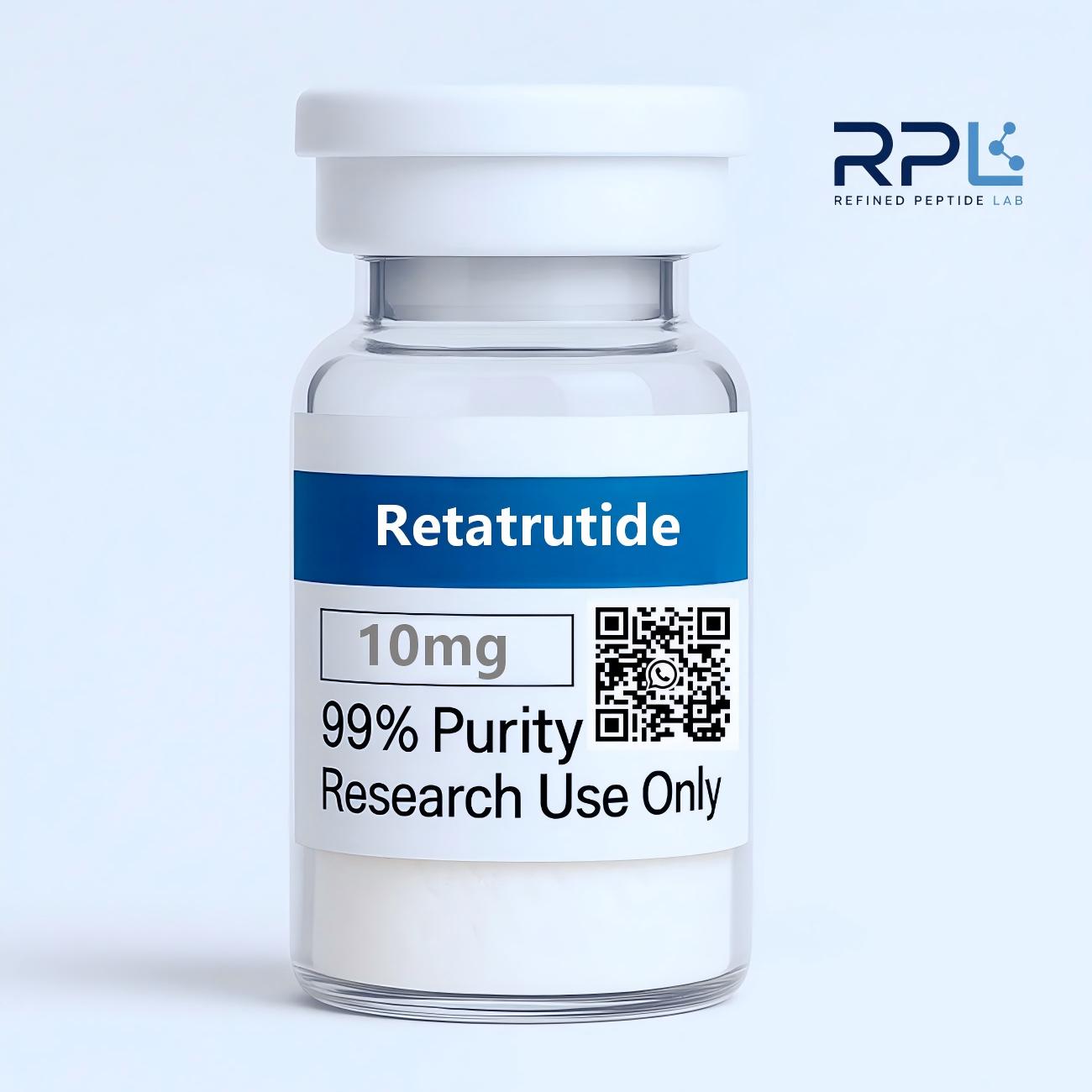
Retatrutide Peptide Manufacturer | RPL Peptide China
Retatrutide is a synthetic triple-receptor agonist peptide that simultaneously targets GLP-1 receptor (GLP-1R), glucose-dependent insulinotropic polypeptide receptor (GIPR), and glucagon receptor (GCGR). It is widely utilized in metabolic signaling and endocrine pathway research models.
| Product Name | Retatrutide Peptide |
| CAS Number | 2381089-83-2 |
| Peptide Type | Triple Receptor Agonist |
| Target Receptors | GLP-1R, GIPR, GCGR |
| Amino Acid Count | 39 Amino Acids |
| Purity | ≥99% (HPLC Verified) |
| Appearance | White to Off-White Lyophilized Powder |
| Molecular Form | Lyophilized Peptide Powder (10 Vials per Box) |
| Grade | Research Grade |
| Storage | Store at -20°C in a Dry Environment |
| Application | Laboratory Research Use Only |
Retatrutide Overview: A Triple-Receptor Peptide for Integrated Metabolic Research
Retatrutide is a laboratory-produced peptide developed to investigate coordinated signaling among three distinct endocrine receptors: GLP-1R, GIPR, and GCGR. This multi-agonist architecture differentiates Retatrutide from earlier incretin-focused compounds by enabling researchers to examine how multiple hormonal pathways influence metabolic regulation simultaneously.
In experimental settings, Retatrutide is frequently utilized to evaluate complex interactions between nutrient-responsive signaling systems and whole-body energy balance mechanisms. Its unique receptor profile has positioned it as a subject of interest within obesity, metabolism, and endocrine research programs.
Signal Cascade Characteristics of Retatrutide
The biological framework associated with Retatrutide differs from conventional peptide receptor agonists because it incorporates three parallel signaling routes into a unified molecular design.
Research pathway model:
Nutrient-responsive endocrine signaling network
→ simultaneous activation of GLP-1R, GIPR, and GCGR
→ modulation of intracellular cAMP-dependent signaling programs
→ alteration of energy partitioning and substrate utilization processes
→ measurable metabolic outcomes in experimental animal and cellular models
This integrated pathway allows investigators to explore how multiple hormonal inputs converge to influence physiological adaptation under varying nutritional and metabolic conditions.
Experimental Applications Across Energy Regulation Models
Retatrutide is commonly incorporated into studies examining systemic energy management. Researchers use the peptide to investigate how coordinated receptor stimulation may affect biological processes involved in nutrient handling and metabolic adaptation.
Examples of research areas include:
- Energy expenditure investigations
- Nutrient partitioning studies
- Metabolic flexibility assessment
- Endocrine signaling pathway mapping
- Experimental obesity model research
- Glucose and lipid metabolism investigations
- Hormonal network interaction studies
Because Retatrutide targets multiple receptor systems simultaneously, it provides a distinctive platform for evaluating cross-talk between endocrine pathways that may not be observable through single-receptor agonists.
Molecular Design Features That Distinguish Retatrutide
The structural concept behind Retatrutide centers on balanced activity across three receptor families associated with metabolic regulation. This design enables investigators to analyze the relative contributions of glucagon-mediated signaling alongside incretin-associated pathways.
Key research characteristics include:
- Triple receptor agonist profile
- Synthetic peptide architecture
- High relevance to metabolic pathway exploration
- Utility in endocrine network investigations
- Compatibility with preclinical research environments
The peptide’s receptor engagement profile has made it an important reference compound for comparative studies involving next-generation metabolic therapeutics and endocrine signaling technologies.
Research Supply Specifications for Laboratory Procurement
Retatrutide is typically supplied for scientific and analytical applications requiring batch consistency, traceability, and standardized handling procedures. Research organizations, biotechnology developers, and academic laboratories often source Retatrutide for controlled experimental programs focused on metabolic science.
Common procurement considerations include:
- Certificate of Analysis (COA) availability
- Batch traceability documentation
- Identity and purity verification testing
- Research-use labeling
- Wholesale and bulk purchasing options
- Long-term research project supply planning
Organizations conducting peptide research frequently prioritize suppliers capable of maintaining consistent manufacturing standards and analytical quality control documentation.
FAQ About Retatrutide
What is Retatrutide?
Retatrutide is a synthetic triple-receptor agonist peptide designed for research involving GLP-1, GIP, and glucagon receptor signaling pathways.
Which receptors does Retatrutide target?
Retatrutide is studied for its activity at GLP-1R, GIPR, and GCGR, allowing simultaneous investigation of multiple endocrine signaling systems.
Why is Retatrutide considered different from traditional incretin peptides?
Unlike peptides that primarily activate a single receptor pathway, Retatrutide incorporates three receptor targets within one molecular framework, enabling broader metabolic pathway research.
What research fields commonly utilize Retatrutide?
Retatrutide is frequently examined in studies involving metabolism, endocrine regulation, obesity models, energy expenditure mechanisms, nutrient sensing, and hormone signaling networks.
Is Retatrutide intended for laboratory research applications?
Yes. Retatrutide supplied by research peptide manufacturers is typically designated for laboratory and scientific investigation purposes and should be handled according to applicable research protocols.
| Size | 10mg, 15mg, 20mg, 30mg, 40mg, 50mg, 60mg |
|---|
Related products
-

Epithalon (Epitalon) Manufacturer & Wholesale Supplier | RPL Peptide China
Price range: $68.00 through $190.00 / box (10 vials)Add to Purchase List This product has multiple variants. The options may be chosen on the product page -
DSIP Peptide Supplier China | Research-Grade China Factory Bulk Supply & COA Verified Material
Price range: $40.00 through $128.00 / box (10 vials)Add to Purchase List This product has multiple variants. The options may be chosen on the product page -
MOTS-C Manufacturer & Wholesale Supplier | RPL Peptide China
Price range: $68.00 through $196.00 / box (10 vials)Add to Purchase List This product has multiple variants. The options may be chosen on the product page -
GHK-Cu (Copper Tripeptide-1) China Manufacturer | RPL Peptide
Price range: $25.00 through $30.00 / box (10 vials)Add to Purchase List This product has multiple variants. The options may be chosen on the product page