SARMs vs Peptides: What’s the Difference? (Complete Guide)
Medical Disclaimer: The information provided in this guide is for educational and informational purposes only and does not constitute medical advice. SARMs and certain peptides are categorized as research chemicals and are not approved by the FDA for human consumption. Always consult with a qualified healthcare professional before undergoing any protocol.
TL;DR — What’s the Difference?
SARMs and peptides are fundamentally different classes of compounds with different mechanisms, goals, and risk profiles. SARMs (Selective Androgen Receptor Modulators) are synthetic compounds that bind to androgen receptors to stimulate muscle growth — similar to anabolic steroids but designed to be more tissue-selective. Peptides are short chains of amino acids that signal your body to produce more growth hormone, repair tissue, or improve recovery. They’re not directly comparable — they work through entirely different biological pathways.
Quick Comparison Table
| Feature | SARMs | Peptides |
|---|---|---|
| What they are | Synthetic androgen receptor modulators | Short amino acid chains (signaling molecules) |
| Mechanism | Bind androgen receptors → increase protein synthesis | Signal natural hormone production (GH, IGF-1, etc.) |
| Primary effect | Muscle growth, strength gains | Recovery, fat loss, anti-aging, sleep |
| Onset of results | 4–6 weeks (visible) | 4–12 weeks (subtle, cumulative) |
| Legal status (US) | Not FDA-approved; sold as “research chemicals” | Some are Rx-only (BPC-157, TB-500); some are supplements |
| Side effect profile | Hormonal suppression, liver toxicity, HDL crash | Generally milder; injection site reactions, water retention |
| Form | Oral capsules or liquids | Usually injectable (sub-Q or IM) |
What Are SARMs?
SARMs were developed in the 1990s and 2000s as a potential alternative to anabolic steroids. The idea was simple: create a compound that gives you the muscle-building benefits of testosterone without the side effects on the prostate, hair, and skin.
How They Actually Work
SARMs bind to androgen receptors in muscle and bone tissue. Unlike traditional steroids, they’re designed to be “selective” — meaning they target these receptors with less impact on other tissues. In practice, this selectivity is partial, not absolute.
Common Compounds in the SARM Space
(Note: Cardarine is a PPARδ agonist and YK-11 is a myostatin inhibitor, but both are commonly grouped with SARMs in the fitness community.)
| Compound | Primary Use | Relative Strength | Estimated Half-Life |
| Ostarine (MK-2866) | Muscle preservation during cut | Mild | ~24 hours |
| Ligandrol (LGD-4033) | Lean mass gain | Strong | ~24–36 hours |
| RAD-140 (Testolone) | Strength and muscle density | Very strong | ~16–20 hours |
| Cardarine (GW-501516) | Endurance & lipid support | N/A (Non-hormonal) | ~24 hours |
| YK-11 | Myostatin inhibition / Dry gains | Experimental | ~6–10 hours |
What Users Actually Report
I’ve followed the SARMs community for years, and a few patterns stand out. Most first-time users start with Ostarine for a “cutting” cycle of 6–8 weeks. They typically report:
- Muscle preservation during caloric deficit — this is the most consistent benefit
- Mild strength gains (10–20% improvement in compound lifts)
- Some fat loss — likely from muscle maintenance raising TDEE
- Recovery improvement — less soreness between sessions
But here’s what I’ve also seen reported consistently: suppression is real. Blood work from users shows LH and FSH dropping within 2–3 weeks on almost any SARM at effective doses.
What Are Peptides?
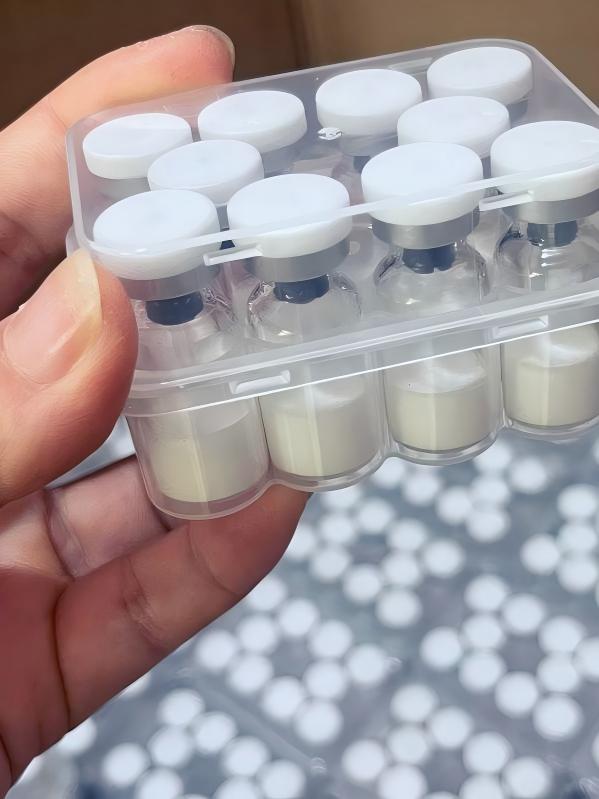
Peptides are a much broader category. They range from over-the-counter beauty peptides (copper peptides in skincare) to prescription-only compounds used for injury recovery and anti-aging.
How Peptides Work
Peptides are signaling molecules. They don’t build muscle directly — they tell your body’s systems to do something. Think of them as messengers rather than builders.
| Peptide | Primary Function | Evidence Level |
|---|---|---|
| BPC-157 | Gut healing, tendon/ligament repair | Moderate (animal studies, extensive anecdotal) |
| TB-500 (Thymosin Beta-4) | Systemic injury recovery, inflammation reduction | Moderate |
| Ipamorelin | GH secretagogue (increases growth hormone pulse) | Strong (for GH release) |
| CJC-1295 | Long-acting GH pulse stimulator | Strong |
| Sermorelin | GHRH analog (prescribed for GH deficiency) | FDA-approved |
| MOTS-c | Mitochondrial health, metabolic regulation | Early research |
| GHK-Cu (Copper Peptide) | Skin repair, wound healing, anti-aging | Well-established |
How Growth Hormone Secretagogues Work (Ipamorelin, CJC-1295)
This is the most common peptide stack in the fitness community. Here’s the mechanism:
- You inject the peptide (sub-Q, typically before bed)
- It mimics the body’s natural GHRH (growth hormone releasing hormone) or blocks somatostatin (the GH inhibitor)
- Your pituitary releases a pulse of growth hormone
- The GH travels to your liver, which converts it to IGF-1
- IGF-1 promotes protein synthesis, collagen production, and fat metabolism
The key difference from SARMs: peptides don’t force muscle growth. They optimize your natural recovery and hormone output within physiological ranges. The results are subtle — better sleep, faster recovery from injuries, improved skin quality, and gradual body composition changes over months.
Key Differences You Need to Know
1. Mechanism of Action
SARMs: Direct receptor activation. They are the signal. This is why results are faster and more dramatic — you’re bypassing the body’s natural regulatory systems.
Peptides: Upstream signaling. They ask your body to produce more of what it already makes. Results are slower because they depend on your body’s response capacity.
2. Risk Profile
SARMs carry real health risks:
- Testosterone suppression — post-cycle therapy (PCT) is often needed
- HDL cholesterol crash — I’ve seen blood work showing HDL dropping from 50+ to under 20 mg/dL in 8 weeks
- Liver enzyme elevation — especially with oral SARMs
- Unknown long-term effects — virtually no human safety data beyond 12 weeks
Peptides are generally safer but not risk-free:
- Injection site reactions — redness, swelling
- Water retention or facial flushing — common with GH secretagogues
- Hunger spikes — GHRP compounds like GHRP-2 and GHRP-6 can cause intense hunger
- Minimal hormonal disruption — unlike SARMs, most peptides don’t suppress natural hormone production
3. Legality
| Compound | US Legal Status | WADA Status |
|---|---|---|
| SARMs (all) | Not FDA-approved; sold as research chemicals only | Banned |
| BPC-157 | Research chemical (not FDA-approved for human use) | Not specifically listed, but prohibited under S0/S2 |
| TB-500 | Research chemical | Banned |
| Ipamorelin | Research chemical (not FDA-approved) | Banned |
| Sermorelin | FDA-approved (prescription only for GH deficiency) | Banned |
| GHK-Cu | Sold as cosmetic ingredient / supplement OK | Not banned |
4. Who Should Consider Each?
Consider SARMs if you: have prior experience with PEDs, understand blood work and PCT, are willing to accept hormonal suppression risk, and want noticeable muscle/strength gains in 6–8 weeks.
Consider peptides if you: want recovery/healing benefits, are avoiding hormonal suppression, prefer gradual sustainable changes, or need injury rehabilitation support.
Neither if you’re a beginner. Both categories have real risks and most “informed consent” in this space comes from forums and YouTube, not clinical guidance.
The Stacking Question
People often ask me whether you can stack SARMs and peptides. Yes — and it’s common. A typical “enhanced recovery” stack might be:
- Ostarine (SARM) — for muscle preservation
- BPC-157 + TB-500 (Peptides) — for joint/tendon health during heavy training
- Cardarine (PPAR agonist) — for endurance and lipid management (though this carries its own risk profile)
But stacking compounds amplifies risk. If you’re running SARMs + peptides, you need regular blood work — at minimum pre-cycle, mid-cycle (week 4), and post-cycle. Half the people I’ve talked to who ran stacks without blood work ended up with unexpected issues (suppression, liver values, or cholesterol markers they didn’t catch until cycle was over).
FAQs
Are SARMs safer than steroids?
SARMs are less researched than anabolic steroids, not necessarily safer. Steroids have decades of clinical data. SARMs have limited human trials. The selectivity advantage is real in theory but incomplete in practice — all SARMs cause suppression at effective doses.
Do peptides build muscle like SARMs?
No. Peptides improve recovery and optimize hormone output within natural ranges. A good peptide cycle might help you gain 1–3 lbs of lean mass over 3 months. SARMs can produce 5–10 lbs in 6–8 weeks. The tradeoff is side effect severity.
Can you get peptides prescribed by a doctor?
Some peptides are prescription-only (Sermorelin for GH deficiency, BPC-157 in compounding pharmacies, GLP-1 agonists like semaglutide). Most peptides used in the fitness community are sold as research chemicals not intended for human use.
Do I need post-cycle therapy (PCT) after SARMs?
Most users need some form of PCT after longer cycles or stronger compounds (LGD-4033, RAD-140). Ostarine at low doses (10–15 mg) for 4 weeks may not require it, but blood work is the only way to know. Common PCT protocols use SERMs like enclomiphene or nolvadex.
Do peptides cause testosterone suppression?
No. Peptides that work through the GH/IGF-1 axis do not suppress the HPTA (hypothalamic-pituitary-testicular axis). This is the main safety advantage over SARMs. However, some peptides (like GHRP-2) can increase prolactin, which deserves monitoring.
What’s the best peptide for injury recovery?
BPC-157 is the most widely reported for acute injuries and gut healing. TB-500 covers broader systemic recovery. Many users run them together as a stack (often called the “BPC/TB protocol”). Research shows BPC-157 promotes angiogenesis (blood vessel formation) in damaged tissue, which accelerates healing.
The Bottom Line
SARMs and peptides are not the same thing, and the choice between them comes down to what you’re trying to achieve. SARMs deliver faster and more dramatic results with significant hormonal risks — treat them like a mild steroid cycle, not a supplement. Peptides offer gradual recovery, healing, and subtle body composition changes with a much better safety profile but require patience and consistent use.
If you’re serious about either, the cost of entry isn’t just the product — it’s blood work, understanding PCT, and knowing your baseline. Without those, you’re flying blind.