Skip to content

Shipping will be resume on 6th Oct | Secured delivery available to the United States, Canada, Europe, Australia, and Mexico. Dismiss

RPL Peptides

RPL Peptide | Global Peptide Wholesale Supplier

Bulk Peptides China Manufacturer Direct

  • Home
  • Products
  • About UsExpand
    • Peptides From China
    • Peptide Tools
  • Blog
  • FAQ
  • Contact
  • Purchase List
  • My account
RPL Peptides
RPL Peptide | Global Peptide Wholesale Supplier
Bulk Peptides China Manufacturer Direct
  • RPL Peptides
    RPL Peptide

    How to Read a Peptide COA: A Practical Guide to Verifying Quality, Identity, and Batch Reliability

    ByRPL PEPTIDE TEAM October 29, 2026October 29, 2026

    How to Read a Peptide COA: A Practical Guide to Verifying Quality, Identity, and Batch Reliability A Certificate of Analysis (COA) is one of the first documents a buyer encounters when evaluating a research peptide. It may contain a product name, batch number, purity percentage, molecular weight, analytical results, and a quality approval. At first…
    Read More How to Read a Peptide COA: A Practical Guide to Verifying Quality, Identity, and Batch ReliabilityContinue

  • RPL Peptides
    RPL Peptide

    HPLC Purity vs Peptide Content: What’s the Difference?

    ByRPL PEPTIDE TEAM October 10, 2026October 10, 2026

    HPLC Purity vs Peptide Content: What’s the Difference? Introduction: The Problem With Treating Peptide Quality as a Single Number A peptide certificate of analysis (COA) may report 99% HPLC purity. At first glance, the meaning seems straightforward: almost the entire sample consists of the desired peptide. But this interpretation overlooks an important distinction in analytical…

    Read More HPLC Purity vs Peptide Content: What’s the Difference?Continue

  • RPL Peptides
    RPL Peptide

    What Does 99% Peptide Purity Actually Mean?

    ByRPL PEPTIDE TEAM September 20, 2026September 20, 2026

    What Does 99% Peptide Purity Actually Mean? A peptide labeled “99% purity” sounds straightforward, but the number can be misunderstood. In most research peptide specifications, a reported purity such as 99% refers to chromatographic purity measured by HPLC, commonly expressed as the percentage of the integrated area of the principal peptide peak relative to the…

    Read More What Does 99% Peptide Purity Actually Mean?Continue

  • RPL Peptides
    RPL Peptide

    CJC-1295 vs Ipamorelin vs Tesamorelin: Mechanism, Half-Life, Evidence & FDA Status (2026)

    ByRPL PEPTIDE TEAM September 2, 2026August 30, 2026

    CJC-1295 vs Ipamorelin vs Tesamorelin: Mechanism, Half-Life, Evidence & FDA Status (2026) Direct answer: CJC-1295, Ipamorelin, and Tesamorelin are three different growth-hormone secretagogues with different molecular identities, receptors, pharmacokinetics, and regulatory status. CJC-1295 and Tesamorelin are GHRH-receptor agonists, whereas Ipamorelin is a selective GHS-R1a agonist. Tesamorelin is the only FDA-approved drug among the three. CJC-1295…

    Read More CJC-1295 vs Ipamorelin vs Tesamorelin: Mechanism, Half-Life, Evidence & FDA Status (2026)Continue

  • RPL Peptides
    RPL Peptide

    BPC-157, TB-500 & GHK-Cu: A Complete Tissue Repair Peptide Research Guide (2026)

    ByRPL PEPTIDE TEAM August 30, 2026August 30, 2026

    BPC-157 vs TB-500 vs GHK-Cu: Tissue Repair Peptides Compared (2026) Direct answer: BPC-157, TB-500, and GHK-Cu are three distinct peptide materials studied in tissue-repair research through different mechanisms — NO/VEGF-associated signaling (BPC-157), thymosin β4-derived actin binding (TB-500), and copper-dependent ECM effects (GHK-Cu). None is an FDA-approved tissue-repair drug; they are supplied for laboratory research use….

    Read More BPC-157, TB-500 & GHK-Cu: A Complete Tissue Repair Peptide Research Guide (2026)Continue

  • RPL Peptides
    RPL Peptide

    Peptide Quality Standards & Analytical Methods: A Complete Laboratory Guide for Research Peptide Verification

    ByRPL PEPTIDE TEAM August 17, 2026August 7, 2026

    Peptide Quality Standards & Analytical Methods: A Complete Laboratory Guide for Research Peptide Verification HPLC, Mass Spectrometry, Endotoxin Testing, Stability Analysis, and Supplier Audit Protocols — Updated 2026 TL;DR — Key Takeaways Table of Contents 1. The Quality Assurance Framework for Research Peptides 1.1 The Analytical Reality of Research Peptides Every peptide researcher eventually confronts…

    Read More Peptide Quality Standards & Analytical Methods: A Complete Laboratory Guide for Research Peptide VerificationContinue

  • Buy KLOW80 Synthetic Peptide | China Peptide Supplier
    RPL Peptide

    KLOW Peptide Blend Synergy Analysis: Pathway Integration, Temporal Dynamics & Combinatorial Research Models

    ByRPL PEPTIDE TEAM August 16, 2026August 7, 2026

    KLOW Peptide Blend Synergy Analysis Pathway Integration, Temporal Dynamics & Combinatorial Research Models — August 2026 Parent page: This cluster is part of the KLOW Peptide Blend: Complete Scientific Guide. It covers the hypothesized synergy mechanisms, pathway integration models, experimental design frameworks, and comparative analyses relevant to the four-peptide combination. For individual peptide deep-dives, see…

    Read More KLOW Peptide Blend Synergy Analysis: Pathway Integration, Temporal Dynamics & Combinatorial Research ModelsContinue

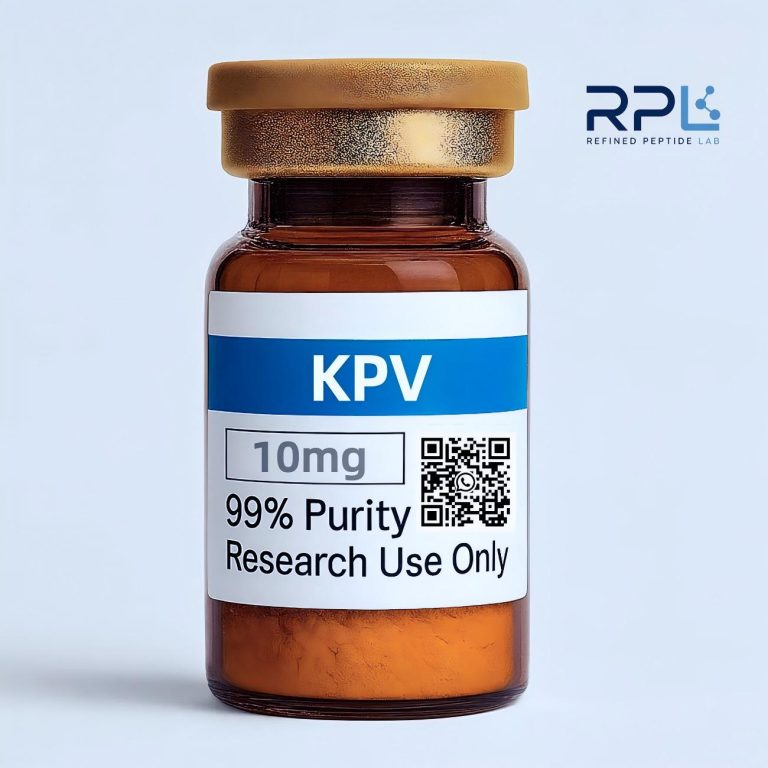
  • KPV Manufacturer & Wholesale Supplier | RPL Peptide China
    RPL Peptide

    KPV Peptide (α-MSH 11-13): Complete Research Guide — Melanocortin Receptor Selectivity and NF-κB Modulation

    ByRPL PEPTIDE TEAM August 14, 2026August 7, 2026

    KPV Peptide (α-MSH 11–13): Complete Research Guide Melanocortin Receptor Selectivity, NF-κB Modulation, and Structure-Activity Relationships — Updated 2026 This page is a standalone deep-dive companion to the KLOW Peptide Blend Scientific Primer. It covers KPV exclusively. For context on the four-peptide KLOW blend, refer to the pillar document. TL;DR — Key Takeaways Table of Contents…

    Read More KPV Peptide (α-MSH 11-13): Complete Research Guide — Melanocortin Receptor Selectivity and NF-κB ModulationContinue

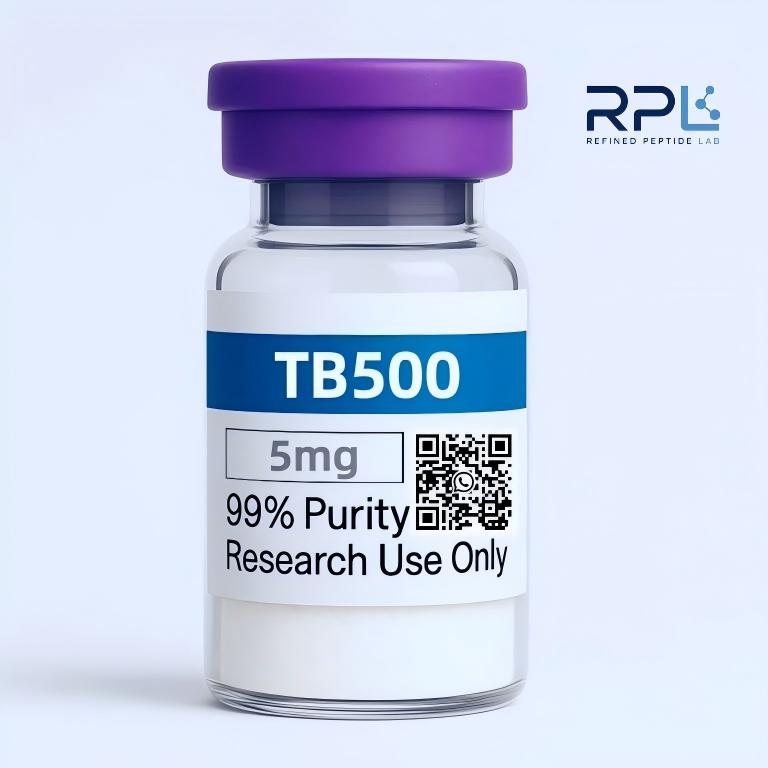
  • TB-500 Peptide (Thymosin Beta-4 Fragment) wholesale
    RPL Peptide

    TB-500 Deep Dive: Actin Sequestration, Cell Migration, and the Thymosin Beta-4 Fragment

    ByRPL PEPTIDE TEAM August 12, 2026August 7, 2026

    TB-500 Deep Dive: Actin Sequestration, Cell Migration, and the Thymosin Beta-4 Fragment A comprehensive biochemical examination of the most studied actin-sequestering peptide fragment Key Takeaways (TL;DR) Table of Contents 1. Molecular Identity 1.1 What Is TB-500? TB-500 is the commercial designation for a synthetic peptide fragment derived from thymosin beta-4 (Tβ4) — a 43-amino-acid, 4,963.51…

    Read More TB-500 Deep Dive: Actin Sequestration, Cell Migration, and the Thymosin Beta-4 FragmentContinue

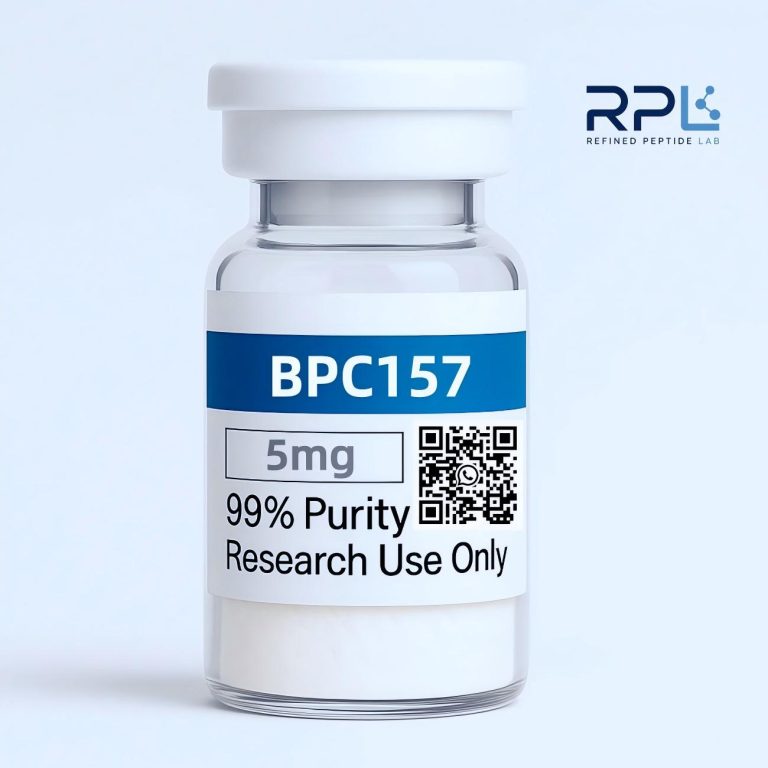
  • BPC-157 Peptide Supplier China | Research-Grade China Factory Bulk Supply & COA Verified Material
    RPL Peptide

    BPC-157 Deep Dive — Molecular Identity, Mechanisms, and the Replication Question

    ByRPL PEPTIDE TEAM August 10, 2026August 10, 2026

    BPC-157: Molecular Identity, Mechanisms, and the Replication Question A comprehensive deep-dive into the gastric pentadecapeptide — Updated August 2026 Parent page: This cluster page is part of the KLOW Peptide Blend: Complete Scientific Guide. See §2.2 for BPC-157 in the context of the full four-component blend. TL;DR — Key Takeaways Table of Contents 1. Molecular…

    Read More BPC-157 Deep Dive — Molecular Identity, Mechanisms, and the Replication QuestionContinue

Page navigation

1 2 3 Next PageNext

RPL PEPTIDE

RPL Peptides

Global Sales Director: Aaron.W
Working Email:[email protected]
Warehouse Add: #52 South Ring Road Baoan District Shenzhen China

INFORMATION

Privacy Policy
Terms & Conditions
Shipping Policy
Return & Refund Policy
Cookie Policy
Disclaimer
Intellectual Property Policy

Sitemap

ORDER RPL PEPTIDE PRODUCT

PRODUCT LIST
PURCHASE LIST
MY ACCOUNT

Product Data Center
Manufacturing Tech Data
Academic Research Center

© 2026 RPL Peptide | Global Peptide Wholesale Supplier

  • Home
  • Products
  • About Us
    • Peptides From China
    • Peptide Tools
  • Blog
  • FAQ
  • Contact
  • Purchase List
  • My account
Search