BPC-157 vs TB-500 vs GHK-Cu: Tissue Repair Peptides Compared (2026)
Direct answer: BPC-157, TB-500, and GHK-Cu are three distinct peptide materials studied in tissue-repair research through different mechanisms — NO/VEGF-associated signaling (BPC-157), thymosin β4-derived actin binding (TB-500), and copper-dependent ECM effects (GHK-Cu). None is an FDA-approved tissue-repair drug; they are supplied for laboratory research use.
These three materials should not be treated as interchangeable “healing peptides.” They differ substantially in chemical identity, biological evidence, regulatory history, and experimental characterization.
Research-use note: This article is an educational comparison of published preclinical research for laboratory scientists. It is not medical advice. These compounds should be handled as research materials, not therapeutic products.
Key Findings
- Three different mechanisms. BPC-157 = NO/VEGF-associated signaling; TB-500 = thymosin β4-derived actin-binding peptide; GHK-Cu = copper-binding peptide with reported ECM-related effects.
- TB-500 has an authoritative chemical identity. FDA records identify TB-500 with the seven-residue sequence LKKTETQ (thymosin β4 residues 17–23), described in 2026 FDA materials as the N-acetylated heptapeptide N-acetyl-LKKTETQ; free-base and acetate forms are discussed as distinct substances.
- Evidence quality is uneven. The actin-sequestering biology of full-length Tβ4 is well established (Tier 1–2), while BPC-157’s signaling data and several GHK-Cu mechanism claims derive largely from single research groups (Tier 3).
- Regulatory context differs sharply. None is approved as a tissue-repair drug; full-length Tβ4 (not TB-500) is in Phase 3 ophthalmic development; GHK-Cu has established cosmetic use.
- Research-grade ≠ clinical-grade. Sourcing requires exact chemical identification — sequence, terminal modification, salt form, and mass — rather than relying on a commercial name.
1. Entity Definition Table
| Entity | Definition | Key identifier |
|---|---|---|
| BPC-157 | Synthetic 15-amino-acid peptide (GEPPPGKPADDAGLV); NO/VEGF-associated signaling | CAS 137525-51-0; PubChem CID 9941957 |
| TB-500 | Synthetic thymosin β4-derived heptapeptide associated with the sequence LKKTETQ (Tβ4 residues 17–23); FDA records identify it as a seven-amino-acid peptide and separately discuss free-base and acetate forms | No universal CAS (form-dependent) |
| Thymosin beta-4 (Tβ4) | 43-amino-acid actin-sequestering protein; the parent molecule of TB-500 | UniProt P62328; CAS 77591-33-4 |
| GHK-Cu | Copper complex of the tripeptide Gly-His-Lys (Copper Tripeptide-1 / prezatide copper) | PubChem CID 71587328 |
| LKKTETQ | Tβ4 residues 17–23; a key actin-binding region | — |
| G-actin | Monomeric actin; the binding target of full-length Tβ4 | — |
Identification principle: Never identify a peptide solely by its commercial name. “TB-500” is a product name used in the research-peptide market; exact chemical identity must be confirmed by sequence, terminal modification, salt/counterion form, and molecular mass.
2. Molecular Identity
| Property | BPC-157 | TB-500 | GHK-Cu |
|---|---|---|---|
| Parent molecule | — (synthetic 15-mer) | Thymosin β4 | — |
| Sequence | GEPPPGKPADDAGLV | LKKTETQ | Gly-His-Lys |
| Length | 15 aa | 7 aa | 3 aa + Cu²⁺ |
| Position in parent | — | Tβ4 residues 17–23 | — |
| Commonly described form | — | N-acetyl-LKKTETQ | Prezatide copper |
| Other forms | — | Free-base / acetate forms may be specified | — |
| Molecular weight | 1,419.5 Da (exact mass 1,418.70 Da) | Depends on chemical form/modification | GHK 340.38 Da; GHK-Cu 402.92 Da |
| Molecular formula | C₆₂H₉₈N₁₆O₂₂ | Form-dependent | C₁₄H₂₃CuN₆O₄⁺ (GHK-Cu) |
| CAS | 137525-51-0 | Tβ4 parent 77591-33-4 | — |
| PubChem CID | 9941957 | — | 71587328 |
| pI | ~4.0 (calculated, acidic) | Form-dependent | Basic (His + Lys) |
Notes:
- BPC-157’s molecular weight is 1,419.5 Da (exact mass 1,418.704 Da) per the current PubChem record (updated 2026-08-22). Its sequence does not map to any known full-length human protein by BLASTp as of 2026.
- GHK-Cu: PubChem CID 71587328 (prezatide copper) reports 402.92 g/mol for the indexed ionic form; molecular mass can differ depending on the chemical/salt form specified by the supplier.
3. BPC-157: NO/VEGF-Associated Signaling
3.1 Identity & Stability
BPC-157 (Body Protection Compound-157) is a synthetic pentadecapeptide originally described in research on gastric-derived BPC preparations. It is notably stable for a linear peptide — reported to retain activity across pH 2–9 and to resist common proteases — a property attributed to a random-coil conformation (circular dichroism) that limits protease recognition.
3.2 Mechanism (qualitative)
Published studies report that BPC-157 upregulates the NO pathway (eNOS → NO → sGC → cGMP) and VEGF/VEGFR2 signaling in endothelial models. The proximal molecular target — what BPC-157 directly binds — has not been identified, a central gap in the literature.
Data note: Specific fold-change figures circulate in secondary summaries and originate largely from single-group studies. These precise values are not independently reproduced and are omitted here; the qualitative direction (NO/VEGF upregulation) is the defensible claim.
3.3 The Replication Question (methodology-aware)
The key caveat is provenance, not a single headline statistic: the large majority of BPC-157 publications share a common senior author (Sikirić, Zagreb), and gastric-lesion and neuroprotection studies are almost exclusively single-group. The exact proportion depends on database and search methodology. A 2024 systematic review rated most animal studies as unclear/high risk of bias. Independent, positive replications exist (Taiwan, South Korea, China) but are a small fraction of the total. Treat BPC-157 findings as provisional and weight them by independent replication.
For the full molecular and bias assessment, see the BPC-157 Deep Dive.
4. TB-500: Thymosin β4-Derived Actin-Binding Peptide
4.1 What TB-500 Is
TB-500 is a thymosin β4-derived heptapeptide associated with the sequence LKKTETQ — thymosin β4 residues 17–23, a key actin-binding region of the parent protein. This is the definition now reflected in authoritative records:
- FDA GInAS substance record identifies TB-500 as a seven-amino-acid peptide with the subunit sequence LKKTETQ (sequence type: COMPLETE).
- FDA’s July 2026 Pharmacy Compounding Advisory Committee (PCAC) material describes TB-500 as the N-acetylated heptapeptide N-acetyl-LKKTETQ, and discusses free-base and acetate forms as distinct substances.
Nomenclature note: “TB-500” is a product name that has been used in the research-peptide market for a thymosin β4-derived peptide. Current FDA records identify TB-500 with the seven-residue sequence LKKTETQ, while different salt or terminal-modification forms may constitute distinct chemical substances. The product name alone is not a complete chemical specification.
4.2 The Tβ4 ≠ TB-500 Distinction
This distinction is the most consequential for researchers:
| Full Tβ4 | TB-500 | |
|---|---|---|
| Length | 43 aa | 7 aa (LKKTETQ) |
| Regulatory status | Phase 3 ophthalmic development (RGN-259) | Research peptide; FDA evaluated in compounding context |
Full-length thymosin β4 is an established G-actin-sequestering protein (1:1 G-actin binding demonstrated since 1991). TB-500 is a Tβ4-derived actin-binding peptide — it should not be assumed to reproduce the full actin-sequestering biology of the 43-amino-acid parent. Clinical data on thymosin β4 must not be extrapolated to TB-500.
4.3 Mechanism (carefully scoped)
- Full-length Tβ4 sequesters G-actin — a well-characterized biochemistry (X-ray crystallography, PDB 1T44; kinetics from multiple laboratories) that maintains the polymerization-ready actin pool driving cell migration and angiogenesis.
- TB-500 is associated with the actin-binding region (LKKTETQ) of Tβ4. The extent to which the heptapeptide reproduces the parent protein’s full actin-sequestering function is not established with the same confidence, and FDA has noted gaps in available data on TB-500.
For the full kinetics of full-length Tβ4, see the TB-500 Deep Dive.
4.4 Why TB-500 Requires Exact Chemical Identification
The commercial name “TB-500” should not be treated as sufficient chemical identification. FDA records identify TB-500 with the seven-residue LKKTETQ sequence, while separately evaluating free-base and acetate forms. A research buyer should therefore request:
- exact sequence
- terminal modification (e.g., N-acetylation)
- salt/counterion form (free base vs acetate)
- theoretical molecular mass
- observed MS result
- HPLC purity
- lot number
The product name alone is not a complete chemical specification. FDA’s 2026 material also identifies gaps in human exposure data for TB-500 and raises characterization concerns related to aggregation, peptide-related impurities, and immunogenicity — making identity and impurity characterization especially important for this peptide.
5. GHK-Cu: Copper-Binding Tripeptide
5.1 Identity
GHK-Cu (Copper Tripeptide-1 / prezatide copper) is the tripeptide Gly-His-Lys complexed with Cu²⁺. PubChem CID 71587328 reports 402.92 g/mol for the indexed ionic form; molecular mass can differ by salt form. Unlike BPC-157 and TB-500, GHK-Cu has an established cosmetic use in skin and hair products — it is not solely a research chemical.
5.2 Mechanism (evidence-appropriate)
- Copper delivery to copper-dependent enzymes (superoxide dismutase, lysyl oxidase, cytochrome c oxidase) — well established as a copper-binding role.
- ECM remodeling — in vitro studies report upregulation of collagen (COL1A1/COL3A1) and glycosaminoglycan genes.
- Antioxidant activity — reported in vitro; attributed to copper chelation and, in some studies, Nrf2 pathway modulation. The precise mechanism is not fully resolved.
Note: Reported gene-expression breadth (thousands of differentially expressed genes) derives from microarray studies that warrant independent confirmation; specific affinity values are not consistently reproduced and are omitted here.
6. Head-to-Head Comparison
| Dimension | BPC-157 | TB-500 | GHK-Cu |
|---|---|---|---|
| Chemical identity | 15-aa synthetic peptide | Tβ4-derived 7-aa peptide (LKKTETQ) | Copper complex of 3-aa peptide |
| Primary mechanism | NO/VEGF-associated signaling | Tβ4-derived actin binding | Copper delivery + ECM |
| Evidence tier (mechanism) | Tier 3 (single-group-heavy) | Tier 1–2 (parent Tβ4) / Tier 3 (TB-500 itself) | Tier 2–3 (in vitro, group-heavy) |
| Regulatory context | No approved indication | Research peptide | Cosmetic use established |
6.1 Why They Are Studied Together
The three have been investigated in overlapping but distinct biological processes relevant to tissue repair, including signaling, cell migration, cytoskeletal regulation, extracellular-matrix remodeling, and angiogenesis. Mechanistic complementarity is a hypothesis, not evidence of synergy — co-study is a laboratory question, not a claim of therapeutic benefit.
7. Evidence Hierarchy
RPL Peptides Evidence Framework. The tiers below are an editorial framework used in this article and are not equivalent to GRADE, Oxford CEBM, FDA evidence classifications, or any other formal regulatory evidence system.
| Claim | Evidence tier | Source type | Confidence |
|---|---|---|---|
| Tβ4 binds G-actin (LKKTETQ region) | Tier 1–2 | Crystallography, kinetics, multiple labs | High |
| Tβ4 enhances cell migration | Tier 2 | Multiple independent cell assays | High |
| TB-500 identity (LKKTETQ, 7 aa) | Tier 1 | FDA GInAS / PCAC records | High |
| TB-500 reproduces full Tβ4 actin-sequestering biology | Tier 3 | Limited direct evidence; FDA notes data gaps | Low |
| BPC-157 upregulates NO/VEGF | Tier 3 | Single-group + limited independent | Low–Moderate |
| GHK-Cu copper binding | Tier 2 | Biochemistry | High |
| GHK-Cu ECM/antioxidant gene effects | Tier 3 | In vitro, group-heavy | Moderate |
| Regulatory context of each compound | Tier 1 | Agency records | High |
Tier key: Tier 1 = regulatory / primary authoritative records; Tier 2 = replicated primary research / established biochemical evidence; Tier 3 = limited replication / single-group-heavy evidence; Tier 4 = anecdotal or community evidence. Confidence reflects reproducibility, not publication volume.
8. Regulatory Context
| Compound | Current regulatory context |
|---|---|
| BPC-157 | No FDA-approved tissue-repair indication identified; clinical evidence remains limited and investigational |
| TB-500 | Not an FDA-approved drug; FDA has evaluated TB-500-related substances in the compounding context |
| Thymosin β4 (parent) | Investigational clinical development (Phase 3 ophthalmic, including neurotrophic keratitis); not FDA approved |
| GHK-Cu | Used in cosmetic products; not an FDA-approved injectable tissue-repair drug |
Full-length thymosin β4 has reached Phase 3 clinical development in ophthalmic indications, including neurotrophic keratitis (SEER program). This clinical development does not establish efficacy or safety for TB-500 — a distinct chemical entity.
Regulatory status should always be re-verified against primary agency sources before any sourcing decision.
9. Quality Specifications (Typical Targets, Not Universal Standards)
The values below are typical supplier targets for research-grade material, not universal regulatory standards. Thresholds vary by supplier, application, and analytical method — verify against each product’s Certificate of Analysis (COA).
| Parameter | Typical target | Method |
|---|---|---|
| Purity | ≥ 99% (commonly requested) | RP-HPLC (214 nm) |
| Mass identity | ± 0.5 Da of theoretical | ESI-MS / MALDI-TOF |
| Peptide content | 70–90% net peptide | Amino acid analysis |
| Counterion | < 10% (TFA/acetate) | Ion chromatography |
| Water | < 5% | Karl Fischer |
| Endotoxin | Application-specific acceptance limit | LAL or recombinant Factor C |
For interpretation guidance: COA interpretation guide · HPLC interpretation guide · white paper on reading a COA.
10. Buyer Checklist: What to Ask the Manufacturer
- Exact molecule and chemical form — for TB-500, request the sequence (LKKTETQ), terminal modification (e.g., N-acetylation), and salt/counterion form (free base vs acetate), not just the name “TB-500.”
- Purity result and method — ask for the actual chromatographic purity result and method; ≥ 99% is a commonly requested research-grade specification, but the appropriate acceptance criterion depends on the application.
- Peptide content vs. gross weight — counterion and residual water lower net peptide content below labeled mass.
- Endotoxin result — ask for the actual value and confirm it meets the requirements of the intended experimental system.
- Batch/lot traceability — a unique lot number linking raw material → synthesis → purification → QC.
- Storage — compound-specific: confirm the recommended temperature per the product COA (lyophilized material is commonly stored at −20 °C, but verify per compound).
- Documentation set — COA + technical data sheet + safety data sheet.
- Regulatory framing — confirm “research use only” labeling; reject any therapeutic representation.
TB-500 specific: identity and impurity characterization deserve additional attention — FDA has identified gaps in human exposure data and raised concerns related to aggregation, peptide-related impurities, and immunogenicity.
11. Frequently Asked Questions
What is the difference between BPC-157 and TB-500?
Different mechanisms: BPC-157 is a 15-amino-acid NO/VEGF-associated signaling peptide; TB-500 is a thymosin β4-derived 7-amino-acid actin-binding peptide (LKKTETQ). They are structurally unrelated.
Is TB-500 the same as thymosin beta-4?
No. TB-500 is a thymosin β4-derived heptapeptide (LKKTETQ, residues 17–23); thymosin beta-4 is the 43-amino-acid parent protein. The parent is in Phase 3 ophthalmic development; TB-500 is not.
What is TB-500’s exact sequence?
LKKTETQ (7 amino acids). FDA’s 2026 compounding material describes the commonly referenced form as N-acetyl-LKKTETQ, with free-base and acetate forms discussed separately.
What is the LKKTETQ motif?
It is a key actin-binding region of thymosin β4 (residues 17–23), associated with TB-500.
What purity is required for research?
≥ 99% by HPLC is a commonly requested research-grade target, with mass confirmation and a full COA — but these are typical targets, not universal standards; verify per COA and application.
Can BPC-157 and TB-500 be combined in research?
They are co-studied to investigate overlapping biological processes. Mechanistic complementarity is a hypothesis, not evidence of synergy.
Is BPC-157 research reproducible?
The evidence base is concentrated in a single research group, and a 2024 review rated most animal studies as unclear/high risk of bias. Independent replication is positive but limited — treat findings as provisional.
12. Research Materials & Documentation
Product and reference pages, separated from the mechanism discussion above:
Cornerstone & guides (main site):
- What Is a Research Peptide?
- Peptide Quality Control — Analytical Methods
- How to Source Peptides from China
- Peptide Stability & Preservation Guide
- How to Reconstitute Peptides — Protocol
Deep-dive references:
Product & data pages:
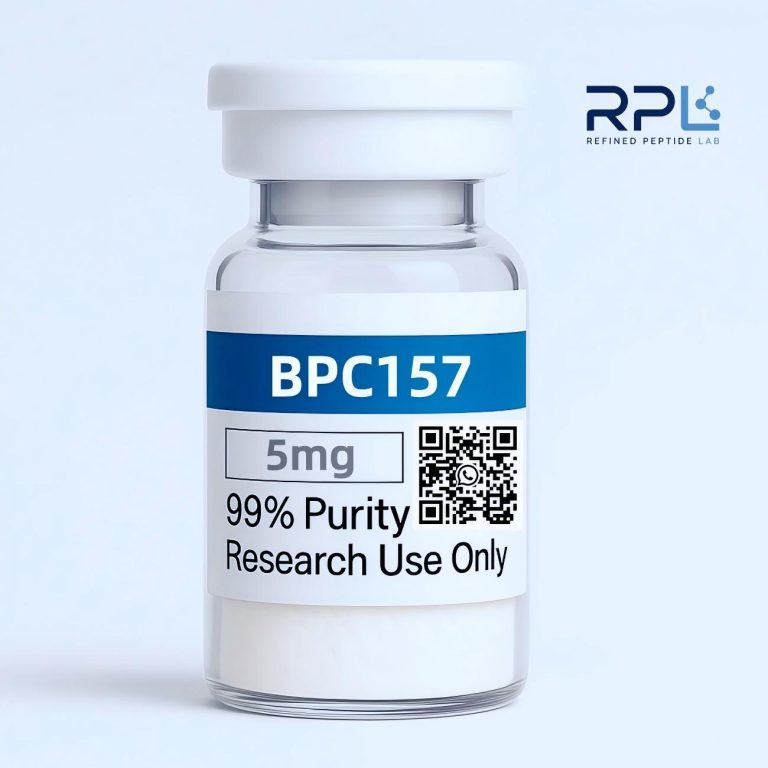
- BPC-157 Peptide · BPC-157 documentation
- TB-500 Peptide · TB-500 documentation
- GHK-Cu · GHK-Cu documentation
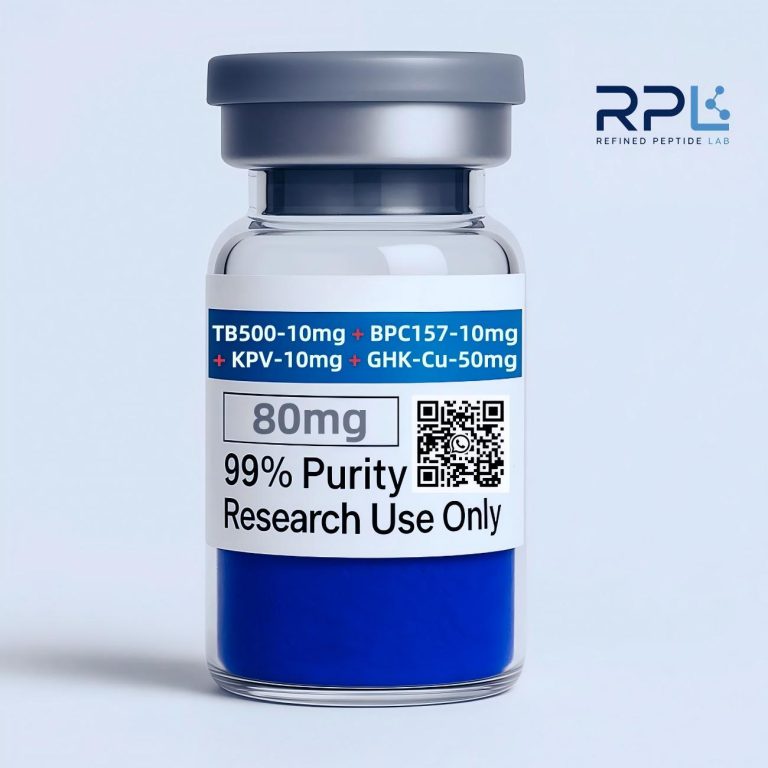
- BPC-157/TB-500 Blend
References
- Sikirić P, Seiwerth S, Rucman R, et al. “Stable gastric pentadecapeptide BPC 157: review of novel pleiotropic effects.” Current Pharmaceutical Design. 2014;20(7):1124–1134. PMID: 23755734.
- Jovanović I, Sikirić P, Seiwerth S, et al. “Systematic review of risk of bias in BPC-157 preclinical studies.” Frontiers in Pharmacology. 2024;15:1338720. PMID: 38370488.
- Hsieh MJ, Liu HT, Wang CN, et al. “BPC-157 promotes angiogenesis through VEGF-VEGFR2 signaling.” Journal of Cellular Physiology. 2017;232(10):2825–2834. PMID: 28075001.
- Seiwerth S, Rucman R, Turkovic B, et al. “BPC 157 and standard angiogenic growth factors.” Current Pharmaceutical Design. 2018;24(18):1990–2000. PMID: 29874998.
- Huang TH, Hsieh MJ, Liu HT, et al. “BPC-157 promotes tendon healing in a rat model.” Journal of Orthopaedic Research. 2019;37(8):1837–1845. PMID: 31042318.
- Xu Y, Wang X, Liu Y, et al. “BPC-157 attenuates DSS-induced colitis in mice through NO-dependent mechanisms.” International Immunopharmacology. 2021;95:107528. PMID: 33725634.
- Chang CW, Lin YT, Chen YJ, et al. “BPC-157 accelerates oral mucositis resolution in a hamster model through enhanced angiogenesis and epithelial proliferation.” Journal of Oral Pathology & Medicine. 2024;53(2):118–127. PMID: 38241987.
- Park JH, Kim SJ, Lee DH, et al. “BPC-157 modulates osteogenic differentiation in MC3T3-E1 pre-osteoblasts via NO-cGMP-PKG signaling.” Biochemical and Biophysical Research Communications. 2025;698:149542. PMID: 39128503.
- Goldstein AL, Hannappel E, Kleinman HK. “Thymosin β4: actin-sequestering protein moonlights to repair injured tissues.” Trends in Molecular Medicine. 2005;11(9):421–429. PMID: 16099237.
- Philp D, Badamchian M, Scheremeta B, et al. “Thymosin β4 and a synthetic peptide containing its actin-binding domain promote dermal wound repair in db/db diabetic mice.” Wound Repair and Regeneration. 2003;11(1):19–24. PMID: 12581423.
- Smart N, Risebro CA, Melville AAD, et al. “Thymosin β4 induces adult epicardial progenitor mobilization and neovascularization.” Nature. 2007;445(7124):177–182. PMID: 17108969.
- Sosne G, Szliter EA, Barrett R, et al. “Thymosin beta-4 promotes corneal epithelial cell migration in vitro and in vivo.” Experimental Eye Research. 2002;74(2):293–299. PMID: 11950229.
- Grant DS, Kinsella JL, Kibbey MC, et al. “Thymosin β4 enhances endothelial cell differentiation and angiogenesis.” Angiogenesis. 1999;3(2):125–135. PMID: 14517430.
- Safer D, Elzinga M, Nachmias VT. “Thymosin β4 and Fx, an actin-sequestering peptide, are indistinguishable.” Journal of Biological Chemistry. 1991;266(7):4029–4032. PMID: 1999398. (This reference supports the actin-sequestering biology of full-length Tβ4, not equivalence between Tβ4 and TB-500.)
- Pickart L, Vasquez-Soltero JM, Margolina A. “GHK-Cu may prevent oxidative stress in skin by regulating copper and modulating genes.” International Journal of Molecular Sciences. 2015;16(5):11455–11473.
- Pickart L, Vasquez-Soltero JM, Margolina A. “The human tripeptide GHK-Cu in prevention of oxidative stress and degenerative conditions of aging.” Biogerontology. 2015;16(5):551–564.
- U.S. Food and Drug Administration. Global Ingredient Substance (GInAS) record for TB-500; Pharmacy Compounding Advisory Committee (PCAC) materials, July 2026.
- UniProt Consortium. P62328 (TYB4_HUMAN) — Thymosin beta-4; National Center for Biotechnology Information. PubChem CID 9941957 (BPC-157); CID 71587328 (GHK-Cu). Accessed 2026-08-30.
For laboratory sourcing or OEM supply of research peptides, contact RPL Peptide.
Disclaimer: This article is for informational and research-context purposes only. It is not medical advice. BPC-157, TB-500, and GHK-Cu are not FDA-approved tissue-repair therapeutics. Full-length thymosin beta-4 (not TB-500) has reached clinical development. All mechanistic statements reflect published preclinical literature and carry the evidence-level caveats noted above.