Peptide Powder Storage: Do Lyophilized Peptides Need Refrigeration? | RPL Peptides
TL;DR
- Yes, lyophilized peptides need refrigeration (or freezing) for storage beyond a few weeks. The powder is stable at room temperature for days during shipping — but at 25°C, degradation runs 50–200× faster than at -20°C.
- -20°C is the practical sweet spot: 2–5 years of stability for most sequences with no specialized equipment required.
- Moisture is the silent killer of stored peptides. Opening a cold vial introduces condensation → hydrolysis. Always equilibrate to room temperature in a desiccator before opening.
- An opened vial has a fraction of the shelf life of a sealed one. Once the septum is pierced, moisture and oxygen have a slow, continuous pathway in.
- See our Peptide Stability & Preservation Guide for the complete degradation chemistry and Reconstitution Protocol for what to do once you’re ready to use your peptide.
Key Statistics
| Metric | Value | Source |
|---|---|---|
| Shelf life at -20°C (sealed vial) | 2–5 years for most peptides | Bachem Technical Note, 2024 |
| Degradation rate ratio: 25°C vs -20°C | 50–200× faster at room temperature | Manufacturer stability data compilation, 2020–2024 |
| Residual moisture in properly lyophilized cake | <1% w/w | Industry standard, RPL QC release specification |
| Time for condensation to form on a cold vial | ≤30 seconds in typical lab humidity (40–60% RH) | Laboratory observation |
| Opened-vial shelf life loss (vs. sealed) | 50–80% reduction at equivalent temperature | Internal QC data, RPL Peptides 2024 |
| Minimum equilibration time before opening frozen vial | 30 minutes | RPL recommended protocol |
| Water activity (a_w) of lyophilized cake | 0.05–0.1 | Below microbial growth threshold of 0.6 |
The Question Researchers Actually Ask
“Do I really need to keep my unopened peptide vials in the freezer? They’re dry powder. The manufacturer shipped them at room temperature. Why would I need to refrigerate something that just survived a week in a cargo hold?”
It’s a fair question. And the answer has two parts:
Part 1: Why room-temperature shipping is fine. A properly lyophilized peptide with <1% residual moisture, sealed under vacuum or inert gas in a glass vial, experiences negligible degradation over 3–7 days at ambient temperature. The Arrhenius equation tells us that degradation at 25°C is faster than at -20°C — but “faster than almost zero” over 5 days is still almost zero. RPL Peptides and every other reputable manufacturer ship at ambient temperature for exactly this reason. The peptide arrives intact.
Part 2: Why room-temperature storage is not fine. The same peptide that shrugs off a 5-day shipping window at 25°C will show measurable degradation after 2–4 weeks at that temperature. After 3 months at room temperature, you might have lost 5–15% purity depending on the sequence. After a year, significant degradation is essentially guaranteed. The rate is slow per day — but it accumulates, and there’s no reversing it.
This is the core of this guide: how to store lyophilized peptides to maximize their usable life, at what temperatures, with what precautions, and for how long.
Part 1: The Temperature-Stability Relationship
Arrhenius in Plain Language
Every chemical reaction speeds up with temperature. Peptide degradation reactions — hydrolysis, oxidation, deamidation, aggregation — are no exception. The rule of thumb:
Every 10°C increase roughly doubles the degradation rate. Every 10°C decrease roughly doubles the shelf life.
This isn’t perfectly precise for every peptide and every degradation pathway, but it’s close enough to be a reliable planning tool.
Temperature Gradients: The Full Picture
| Storage Temperature | Degradation Rate (Relative) | Recommended Maximum Duration | Typical Use Case |
|---|---|---|---|
| -80°C | 1× (baseline) | 5–10+ years | Long-term archival, high-value custom syntheses |
| -20°C | 2–5× | 2–5 years | Standard storage for all research peptides |
| 4°C | 10–30× | 6–12 months | Short-term working stock |
| 20–25°C (Room Temp) | 50–200× | 1–4 weeks (sealed) | Shipping transit only |
| 30–40°C | 200–1,000×+ | Days | Never intentionally store at this temperature |
[Source: Compilation of manufacturer guidelines (Bachem, Thermo Fisher, GenScript) correlated with Arrhenius-based degradation models, 2020–2025]
What This Means in Practice
Let’s make it concrete with a hypothetical mid-length peptide (20 AA, no oxidation-sensitive residues):
- -20°C: At month 24, HPLC purity might have dropped from 99.2% to 98.5%. Still research-grade.
- 4°C: At month 12, purity might have dropped from 99.2% to 97.0%. Still usable but showing age.
- 25°C (room temp): At month 3, purity might have dropped from 99.2% to 94.5%. Borderline for many research applications.
- 25°C: At month 12, purity is likely below 90%. Not reliable for quantitative work.
The degradation curve is not linear — it accelerates over time as initial degradation products create microenvironments that further destabilize the remaining intact peptide.
Part 2: Recommended Storage by Time Horizon
Short-Term: Less Than 1 Week
Storage: Sealed vial at room temperature is acceptable.
If you’ve just received your RPL Peptides order and you’ll be using everything within the week, you can leave the sealed vials at room temperature. Keep them in their original packaging (which includes desiccant), away from direct sunlight, in a stable-temperature environment (not next to a window or heat source).
Do not open the vials if you’re not using them yet. A sealed vial with intact vacuum/inert gas headspace is a closed system. Opening it breaks that protection.
Medium-Term: 1 Week to 3 Months
Storage: 4°C (refrigerator).
Move your peptide vials to the refrigerator. This is a standard domestic or lab refrigerator at 2–8°C. At this temperature:
- Sealed vials: stable for 6–12 months for most peptides.
- Opened vials (septum pierced, dry powder only): stable for 1–3 months IF stored in a moisture-barrier pouch with fresh desiccant. Without desiccant protection, expect 2–4 weeks.
Important: A domestic refrigerator has higher humidity than a lab cold room. If you’re storing opened vials in a regular fridge, the moisture-barrier pouch with desiccant is non-negotiable.
Long-Term: More Than 3 Months
Storage: -20°C (standard freezer).
This is the RPL recommended storage condition for all lyophilized peptide products. At -20°C in a sealed vial protected from light:
- Sealed vials: 2–5 years for most peptides.
- Opened vials with proper moisture protection: 3–12 months (sequence-dependent).
- This matches the storage recommendation printed on every RPL Peptides Certificate of Analysis.
Maximum Stability: Archival Storage
Storage: -80°C (ultra-low freezer).
For high-value custom peptides, reference standards, or long-term stability archives:
- Sealed vials: 5–10+ years.
- Opened vials with moisture control: 1–3 years (sequence-dependent).
The practical constraint: most research labs and procurement facilities don’t have -80°C storage readily available. -20°C is the accessible gold standard.
Part 3: Moisture — The Storage Variable Nobody Plans For
The Condensation Trap
This scenario is so common it deserves its own name: The Cold Vial Trap.
- Researcher removes a peptide vial from the -20°C freezer.
- Researcher immediately opens the vial to weigh out powder or check the cake.
- Within seconds, ambient humidity condenses on the cold glass surface and on the cold lyophilized cake.
- Researcher closes the vial and puts it back in the freezer.
What just happened, chemically: The lyophilized cake, which was dry to <1% residual moisture, now has liquid water condensed directly onto it. Hydrolysis begins. Even though the vial goes back to -20°C, the water is already there — freezing doesn’t eliminate it, it just immobilizes it. Every time the vial warms up again (next time it’s removed from the freezer), that water is available for hydrolysis.
The fix is simple, but non-negotiable:
- Before opening any frozen vial, place it in a sealed desiccator or airtight container with indicating desiccant.
- Wait 30 minutes minimum for the vial to reach room temperature. The entire vial — glass, stopper, contents — must equilibrate.
- Only then open it.
How to tell if your desiccant is still working: Use indicating desiccant. Drierite (calcium sulfate) turns from blue to pink when saturated. Silica gel with cobalt chloride turns from blue to pink. When the color changes, replace or regenerate the desiccant (Drierite can be oven-dried at 210°C for 2 hours; silica gel at 120°C).
Humidity Control for Opened Vials
Once a vial’s septum has been pierced, you have a permanent pathway for slow moisture ingress. The pierced septum is not a perfect seal — over weeks to months, ambient humidity diffuses through the puncture site.
For opened vials stored at -20°C:
- Place the vial in a moisture-barrier pouch (Mylar-foil laminate).
- Add a fresh indicating desiccant pack.
- Heat-seal the pouch.
- Label the outside with peptide name, date opened, and expected stability.
This setup costs roughly $0.30 per pouch and extends opened-vial shelf life by 3–10×.
Desiccant Types Compared
| Type | Indicator | Regenerable? | Cost/Vial | Notes |
|---|---|---|---|---|
| Silica gel | Blue → Pink (cobalt chloride) | Yes (120°C, 2 hrs) | ~$0.10 | Most common; cobalt chloride indicator is being phased out in EU (REACH) |
| Silica gel (iron-based indicator) | Orange → Green/Colorless | Yes (120°C) | ~$0.15 | REACH-compliant alternative |
| Drierite (CaSO₄) | Blue → Pink | Yes (210°C, 2 hrs) | ~$0.20 | Higher capacity than silica gel at low humidity |
| Molecular sieve (zeolite) | No built-in indicator | Yes (250°C+) | ~$0.15 | Highest capacity at very low humidity; best for long-term storage |
| Clay desiccant (montmorillonite) | No indicator | No | ~$0.05 | Budget option; lowest capacity; not recommended for peptide storage |
Recommendation: Drierite or molecular sieve for long-term peptide storage. Silica gel with indicator is fine for short-to-medium-term use.
Part 4: Opened vs. Sealed Vials — The Stability Gap
The difference between a sealed vial and an opened one is not subtle. It’s often a 50–80% reduction in expected shelf life.
What Changes When You Pierce the Septum
| Factor | Sealed Vial | Opened Vial (Septum Pierced) |
|---|---|---|
| Moisture ingress | None (sealed system) | Slow, continuous via puncture site |
| Oxygen exposure | None/low (vacuum or inert gas) | Ambient oxygen diffuses through puncture |
| Sterility | Intact sterility barrier | Barrier compromised; sterility no longer guaranteed |
| Headspace gas | Factory-controlled (vacuum/argon/N₂) | Ambient air now in headspace |
| Expected shelf life at -20°C | 2–5 years | 3–12 months (with moisture protection) |
Opened Vial Management Protocol
For researchers and procurement teams managing inventory:
If you opened the vial only to inspect the cake (no powder removed):
- Seal in a moisture-barrier pouch with fresh desiccant.
- Store at -20°C.
- Use within 3–6 months.
- Label clearly: “OPENED — [date]. Use by [date].”
If you removed dry powder for aliquoting:
- Transfer remaining powder to a new sterile, pre-weighed vial (if precision matters).
- Crimp-seal with a new septum.
- Alternatively, follow the pouch + desiccant + -20°C approach above.
- Use within 1–3 months.
If you opened the vial and suspect moisture exposure (opened it cold, opened it in a humid environment, left it uncapped):
- Reconstitute immediately or within 24 hours.
- Do not attempt long-term dry storage — the cake has absorbed moisture, and hydrolysis is underway.
- Use the peptide or accept the risk of partial degradation.
Part 5: Sequence-Specific Storage Considerations
Not all peptides store equally at a given temperature. Sequence is the dominant variable.
Storage Stability by Peptide Class
| Peptide Class | -20°C (Sealed) | 4°C (Sealed) | Room Temp (Sealed) | Key Vulnerability |
|---|---|---|---|---|
| Short (<15 AA), no Met/Cys/Trp/Asn | 5+ years | 2–3 years | 1–3 months | Very stable; minimal degradation pathways |
| Medium (15–30 AA), standard residues | 3–5 years | 1–2 years | 2–4 weeks | Hydrolysis is the primary degradation route |
| Long (>30 AA), standard residues | 1–3 years | 6–12 months | 1–2 weeks | More amide bonds = more hydrolysis targets |
| Contains Met/Cys residues | 1–3 years | 6–12 months | 1–2 weeks | Oxidation is the dominant pathway |
| Contains Asp-Pro bonds | Variable (6 mo–2 yrs) | 3–6 months | Days to 1 week | Acid-catalyzed Asp-Pro cleavage |
| Cyclic / disulfide-bridged | 2–4 years | 1–2 years | 2–8 weeks | Disulfide scrambling at elevated temp |
| PEGylated or conjugated | 1–3 years | 6–12 months | 1–4 weeks | PEG autoxidation; conjugate linkage stability |
| Custom peptides (unvalidated stability data) | Assume 1–2 years | Assume 3–6 months | Assume 1–2 weeks | Unknown; monitor by periodic HPLC |
[Source: Aggregated from manufacturer stability data and USP <797> for compounded preparations, 2020–2024; RPL Peptides internal batch stability records]
How RPL Peptides Determines Storage Recommendations
For every catalog peptide and custom synthesis, the storage recommendation on your COA is based on:
- Sequence analysis — pI, GRAVY score, presence of degradation-prone motifs (Asp-Pro, Asn-Gly, Met)
- Accelerated stability testing — representative batches stored at 25°C, 40°C, and 60°C to model degradation kinetics
- Real-time stability data — ongoing monitoring of retained samples at -20°C and 4°C
If you’re purchasing custom peptides and need extended stability data (e.g., for a regulatory submission or long-term study), we can design and execute a customized stability study as part of your synthesis program. Contact our technical team for details.
Part 6: Shipping and Receiving — What Happens Before Storage
How Peptides Are Shipped
RPL Peptides ships all products at ambient temperature in sealed vials with desiccant packaging. This is standard practice across the peptide manufacturing industry.
Why ambient temperature shipping works:
- Properly lyophilized peptides (residual moisture <1%) are chemically stable for 3–7 days at 20–30°C.
- The degradation that occurs during this window is below the detection threshold of standard HPLC analysis.
- Cold-chain shipping (refrigerated or frozen) adds cost and complexity without meaningful benefit for lyophilized peptides in short-transit scenarios.
When cold-chain shipping is necessary:
- Peptides with known thermal lability (sequence-specific, pre-determined by stability studies)
- Reconstituted/frozen peptide solutions (entirely different from lyophilized powder)
- Regulatory requirements in specific jurisdictions (some countries mandate cold-chain import for certain substance classes)
- Custom peptides with temperature-sensitive modifications (e.g., certain fluorescent labels, enzymatically labile conjugates)
What to Do When Your Peptides Arrive
1. INSPECT the package. Check for damage to the outer packaging.
2. OPEN the shipping container. Verify vial count matches your order.
3. INSPECT each vial. Check the lyophilized cake:
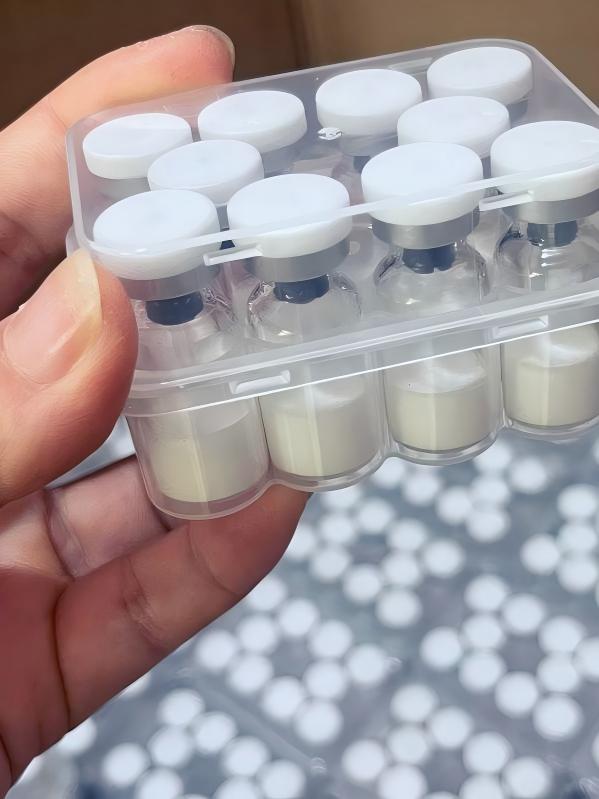
   - Intact, uniform white powder/cake = EXPECTED
   - Brown, collapsed, or stuck to the stopper = FLAG for QC review
   - Broken vial = Document with photo, contact RPL support
4. TRANSFER vials to storage. Move to 4°C or -20°C within 24 hours of receipt.
5. STORE properly. Keep sealed until use. Protect from light (amber vials or dark storage).
6. LOG in your inventory system. Record:
   - Peptide name, batch number, quantity, date received
   - Storage location and temperature
   - COA reference number
The 24-Hour Rule
Your peptide vials spent 3–7 days at ambient temperature during shipping. They can handle another 24 hours at room temperature without meaningful degradation. But after that:
- <1 week until use: Keep at room temp (sealed, dark).
- 1 week to 3 months until use: Refrigerate (4°C).
- >3 months until use: Freeze (-20°C).
Part 7: Storage Setup — What You Need
Minimum Viable Storage Setup
| Item | Purpose | Approximate Cost |
|---|---|---|
| Freezer (-20°C capable) | Temperature-controlled storage | Already available in most labs |
| Airtight storage container (Tupperware-grade or lab desiccator) | Humidity isolation; keeps peptides segregated from food items in shared freezers | $5–30 |
| Indicating desiccant packs | Moisture control inside the storage container | $0.20–0.50/pack |
| Freezer-grade labels and permanent marker | Clear labeling; standard labels fall off in the cold | $5–10/pack |
| Inventory log (spreadsheet or notebook) | Track batch numbers, dates, storage locations | Free |
Total cost: ~$20–50 for everything beyond the freezer you already have.
Recommended Upgrade: Vacuum Sealer
For labs storing opened vials or managing bulk peptide inventory:
| Item | Purpose | Approximate Cost |
|---|---|---|
| Impulse heat sealer (or vacuum sealer) | Sealing moisture-barrier pouches | $30–100 |
| Mylar-foil moisture-barrier pouches | Individual vial protection | $0.10–0.30/pouch |
| Desiccant + oxygen absorber combo packs | Dual protection inside sealed pouches | $0.30–0.50/pouch |
Total upgrade cost: ~$50–150. For a lab that uses $2,000+/year in peptides, this pays for itself the first time it prevents a degraded batch.
Part 8: Common Storage Mistakes
| Mistake | What Happens | Prevention |
|---|---|---|
| Opening a cold vial | Condensation on cake → localized hydrolysis | ALWAYS equilibrate 30 min in desiccator |
| Storing peptides in a frost-free freezer | Frost-free freezers cycle above freezing to prevent ice buildup; each cycle causes slow moisture ingress and temperature fluctuations | Use a manual-defrost freezer or add thermal mass (gel packs) to buffer temperature swings |
| Storing in the freezer door | Door shelves experience the largest temperature swings during opening; variable conditions accelerate degradation | Store peptides in the back of the freezer where temperature is most stable |
| Using non-indicating desiccant | You can’t tell when it’s saturated and needs replacement | Use indicating desiccant; check color monthly |
| Not logging batch numbers | If a quality issue arises, you can’t trace it back to the specific batch without batch numbers | Log batch number and storage start date at minimum |
| Storing reconstituted peptide long-term instead of powder | Reconstituted peptide degrades 100–1,000× faster than lyophilized powder | Keep peptides lyophilized until you’re ready to use them; reconstitute on demand |
| Storing opened and sealed vials together without differentiation | Opened vials degrade much faster; without clear labeling, you may unknowingly use degraded material | Segregate opened vs. sealed inventory; use different colored labels or separate containers |
| Assuming all peptides in a batch degrade at the same rate | Position in the freezer, vial seal integrity, and handling history create vial-to-vial variability | Pull QC samples periodically if long-term storage is required |
FAQ
Do peptides need to be refrigerated before reconstitution?
Yes, for storage beyond a few weeks. Lyophilized powder is stable at room temperature for days to weeks — which is why manufacturers ship at ambient temperature — but the degradation rate at 25°C is 50–200× faster than at -20°C. For any storage period longer than 1–2 weeks, move your peptides to 4°C (short-term) or -20°C (long-term). See our Peptide Stability Guide for the complete degradation chemistry.
What temperature should I store lyophilized peptides?
-20°C is the recommended long-term storage temperature. It provides 2–5 years of stability for most peptide sequences and is accessible in virtually every research facility. -80°C provides even longer stability but is rarely necessary. 4°C is acceptable for 6–12 months. Room temperature should be limited to shipping transit and short-term holding (1–2 weeks maximum for sealed vials).
How long can I store peptides at -20°C?
For sealed, unopened vials: 2–5 years for most peptides. Short, stable sequences (<15 AA, no sensitive residues) can exceed 5 years. Long sequences (>30 AA) or those with oxidation-sensitive residues: 1–3 years. Always check your COA for peptide-specific guidance.
What happens if I open a frozen vial without letting it warm up?
Condensation forms on the cold glass and lyophilized cake as ambient humidity hits the cold surface. This introduces liquid water directly into the dry powder, triggering hydrolysis. The damage is immediate and irreversible. Always equilibrate frozen vials to room temperature in a desiccator for 30 minutes before opening.
Can I store peptides in a regular refrigerator instead of a freezer?
Yes — but for no more than 6–12 months. At 4°C, degradation runs 10–30× faster than at -20°C. For peptides you’ll use within a few months, the refrigerator is fine. For anything beyond that, use the freezer.
How do I know if my stored peptide powder has degraded?
The most reliable method is HPLC analysis. Visually: look for cake collapse, discoloration (yellow or brown), or sticky/gummy texture (indicative of moisture absorption). A properly stored peptide should look identical to the day it arrived — a uniform, white to off-white, dry powder cake. If you’re uncertain, run an analytical HPLC or contact RPL technical support with your batch number for guidance.
Does peptide length affect how long I can store it?
Yes — significantly. Short peptides (<10 AA) with no sensitive residues can remain stable for 5+ years at -20°C. Medium peptides (15–30 AA): 3–5 years. Long peptides (>30 AA): 1–3 years. Every additional amino acid adds another amide bond that can hydrolyze, and longer chains have more surface area for aggregation-prone interactions.
Can I refreeze a vial of dry powder that I took out of the freezer but didn’t open?
If the vial remained completely sealed (cap and crimp intact, no septum puncture), you can return it to the freezer. The key concern is condensation — if the vial was allowed to fully equilibrate to room temperature while sealed, the internal atmosphere is now at ambient humidity, not the factory-controlled dry atmosphere. This slightly increases long-term degradation rate but doesn’t immediately compromise the peptide. For maximum stability, use that vial within 6–12 months rather than expecting the full 2–5 year window.
Key Takeaways
- -20°C is the practical gold standard for long-term peptide storage. It gives you 2–5 years of stability with equipment every lab already has.
- Moisture is the #1 threat to stored peptides — not temperature. Condensation from opening cold vials causes more degradation than months of room-temperature storage.
- The 30-minute equilibration rule is non-negotiable. Always warm frozen vials to room temperature in a desiccator before opening. No exceptions.
- Opened vials have 50–80% shorter shelf life than sealed ones. Once you pierce the septum, you have a permanent moisture and oxygen ingress pathway. Compensate with moisture-barrier pouches and fresh desiccant.
- Sequence determines stability more than any general guideline. A 9-AA peptide with no sensitive residues at -20°C is practically immortal. A 36-AA peptide with two methionines at 4°C can lose 10% purity in a month. Know your sequence.
- Proper storage setup costs under $50. A desiccator, indicating desiccant, and freezer-grade labels. The ROI is measured in prevented degradation.
- Log everything. Batch numbers, storage dates, storage temperatures. When something goes wrong, your inventory log is the first — and best — diagnostic tool.
Related Resources from RPL Peptides
- Pillar Guide: Peptide Stability & Preservation: From Lyophilized Powder to Stable Solution
- Cluster 1: How to Reconstitute Peptides — Step-by-Step Protocol
- Method Guide: Lyophilization of Peptides — Complete Technical Method
- Method Guide: RP-HPLC Peptide Analysis — Purity Assessment
- Product Pages: BPC-157 | AOD9604 | AHK-Cu | DSIP